

- Medical News
The Courtroom Curriculum: How India’s Medical Education Swapped Classrooms for Courtrooms

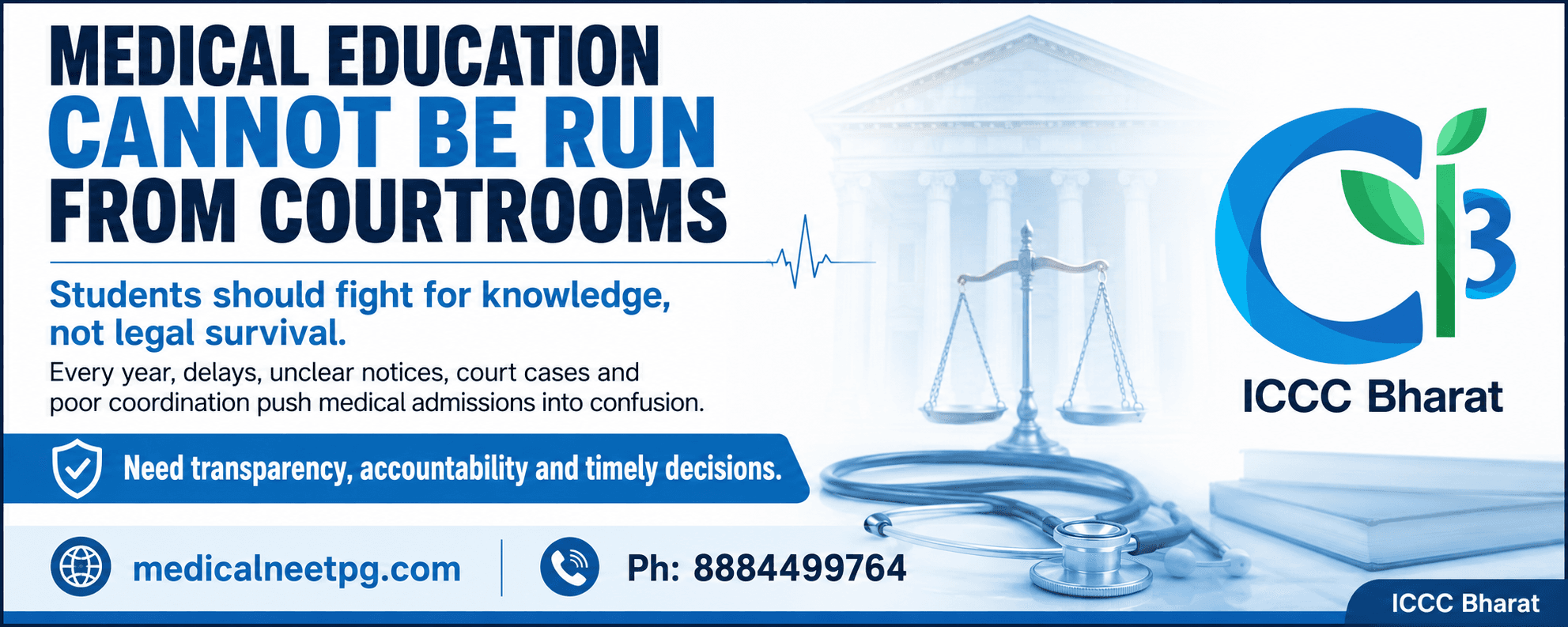
Every year, a familiar and tragic ritual plays out across India. Hundreds of thousands of aspiring doctors finish their grueling entrance exams, only to pack their bags not for medical colleges, but for the corridors of the High Courts and the Supreme Court.
Medical education in India has officially been hijacked. It no longer belongs to universities, academies, or expert counseling bodies. It belongs to the judiciary.
This annual collapse of the medical admission cycle is more than an administrative failure; it is a profound national shame. It reveals a governance structure that has entirely lost control of its most critical educational sector, leaving a generation of future healers trapped in legal battles rather than educational ones.
The Vacuum of Accountability
The core of the crisis lies in a devastating combination of bureaucratic incompetence and political paralysis.
Ministers and top-tier officials appear chronically incapable of making timely, decisive, or legally sound choices. When structural flaws, paper leaks, or counseling discrepancies surface, the response from ministry officials is almost entirely uniform: vague statements, deflections, and a complete lack of grasp on the ground reality.
THE CRISIS PIPELINE:
Exam Chaos ──> Bureaucratic Silence ──> Policy Voids ──> Judicial Intervention
This raises an uncomfortable but necessary question: Do the officials steering the nation’s medical education policy actually understand the systems they oversee? Or have they inherited these powerful positions purely through political proximity and systemic privilege?
When those in power lack the technical acumen to manage a modern, massive examination and admission framework, policy voids are inevitable. And where policy fails, litigation thrives.
Systemic Consequences
The costs of this systemic failure are staggering, affecting the very foundation of our healthcare future:
- The Psychological Toll: Brilliant young minds are subjected to months of agonizing uncertainty. Instead of studying anatomy and biochemistry, 18-year-olds are forced to learn legal jargon, track case numbers, and watch court livestreams.
- The Calendar Collapse: Prolonged court battles delay the academic calendar. Batches start late, semesters are compressed, and the overall quality of training is fundamentally compromised to make up for lost time.
- Institutional Erosion: Autonomous counseling bodies and medical universities have been reduced to mere spectators. Their authority has been eroded because they lack the teeth—or the backing—to execute a foolproof, transparent process.
Restoring Autonomy to Academics
The government must urgently reclaim control from the courtroom and hand it back to the campus. To fix a broken system, a clear shift in execution is required:
| Current Status Quo | Required Structural Reform |
| Judicial Arbitrage: Courts act as the de facto regulators, fixing errors reactively. | Empowered Regulators: Establish a genuinely autonomous, expert-led task force to manage admissions transparently. |
| Vague Bureaucracy: Confusing, reactive public statements that fuel panic and litigation. | Radical Transparency: Open-source answer keys, real-time grievance tracking, and strict accountability for administrative errors. |
| Political Appointments: Decision-makers lacking technical expertise in large-scale testing. | Merit-First Leadership: Appointing educational scientists and logistics experts to lead testing and counseling frameworks. |
Medical education cannot be managed by ad-hoc crisis management. The government needs to stop hiding behind judicial interventions. It is time to empower universities and counseling agencies with the resources, autonomy, and modern infrastructure required to run a clean system.
Our students deserve to fight their battles in libraries and laboratories—not before a bench of judges. The health of the nation depends on it.