
- Medical News
- Mohfw News
- NBE News
Who Is Responsible for the Loss of PG Medical Seats? A Public Appeal to PMO, MoHFW, NMC, NBEMS and MCC

The NEET-PG 2025–26 admission process has once again raised a serious national question: who will take responsibility when thousands of postgraduate medical seats remain vacant, students lose an academic year, and state counselling authorities are left confused by delayed and uncoordinated decisions?
This is not merely an administrative issue. It affects doctors, parents, medical colleges, hospitals, patients and the future healthcare strength of India.
In January 2026, NBEMS issued a notice reducing the qualifying percentile for NEET-PG 2025 after directions from the Ministry of Health and Family Welfare. The notice stated that the revised cut-off was issued as per MoHFW directions dated 09.01.2026. Later, the matter reached the Supreme Court, where concerns were raised that drastic percentile reduction, including very low or zero-level eligibility, may affect the standards of medical education.
The problem is that no authority appears ready to accept responsibility. NMC says it has limited power. NBEMS has reportedly stated before the Supreme Court that it had no role in the policy decision to revise the cut-off, while the policy decision itself came from the government side. MCC counselling has repeatedly faced delays, revisions and confusion, and state counselling authorities often have to wait, pause or modify their own schedules because of central-level decisions. MCC’s own PG counselling page shows multiple schedules, state schedule notices, revised counselling notices, admitted-candidate lists and stray-vacancy activity for PG 2025, reflecting how stretched and complicated the process became.
The biggest sufferers are students. Many candidates plan their careers, finances and documents around counselling timelines. When counselling is delayed, revised or stopped midway, students lose opportunities. Some miss state rounds. Some are confused about NRI quota rules. Some do not know whether they are eligible after percentile changes. Some wait till the last moment, only to find that seats remain vacant but no practical solution is available.
This is where the role of three major institutions must be questioned respectfully but firmly:
1. Ministry of Health and Family Welfare must create a clear national policy on percentile reduction, minimum qualifying marks and seat-wastage prevention.
2. National Medical Commission must ensure that medical education standards are protected while also ensuring that approved PG seats do not go waste because of late decisions or unclear admission monitoring.
3. NBEMS and MCC must ensure that examination, result, eligibility and counselling processes are timely, transparent and coordinated with states.
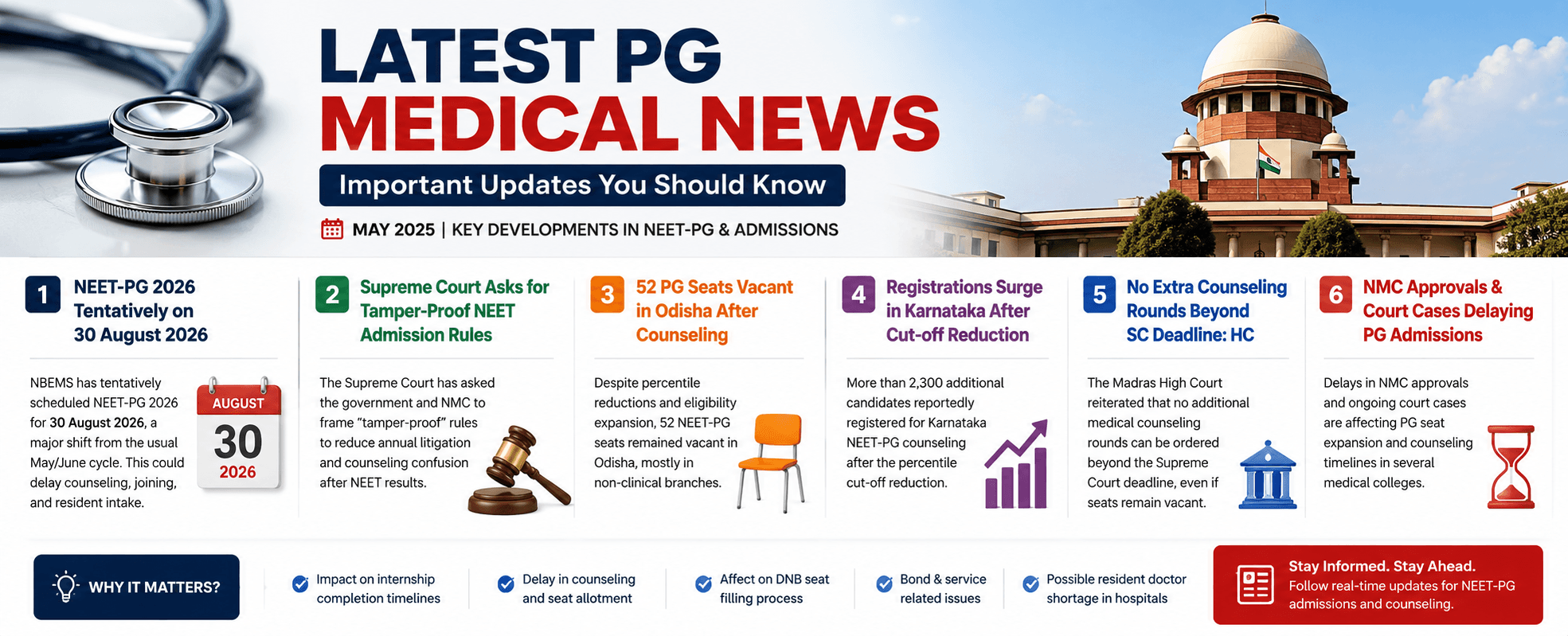
It is also important to note that NMC has now reopened the Admission Monitoring Portal for NEET-PG 2025 admission data submission from 25.05.2026 to 08.06.2026, asking colleges to upload admission details within the timeline. But students are asking a very valid question: if colleges are being given additional time to update admission data, what about the students whose opportunities were lost because of delayed counselling, unclear instructions and vacant seats?
Vacant seats are a national loss. A government PG medical seat going vacant is a loss to the public system. A private or deemed seat going vacant is also a loss to medical education capacity. Non-clinical and para-clinical seats going vacant will directly affect future faculty availability, teaching quality and medical college expansion.
The answer cannot be only “seat filling.” At the same time, the answer cannot be “let seats go waste.” India needs a balanced policy: minimum academic standards plus zero avoidable seat wastage.
Public Appeal
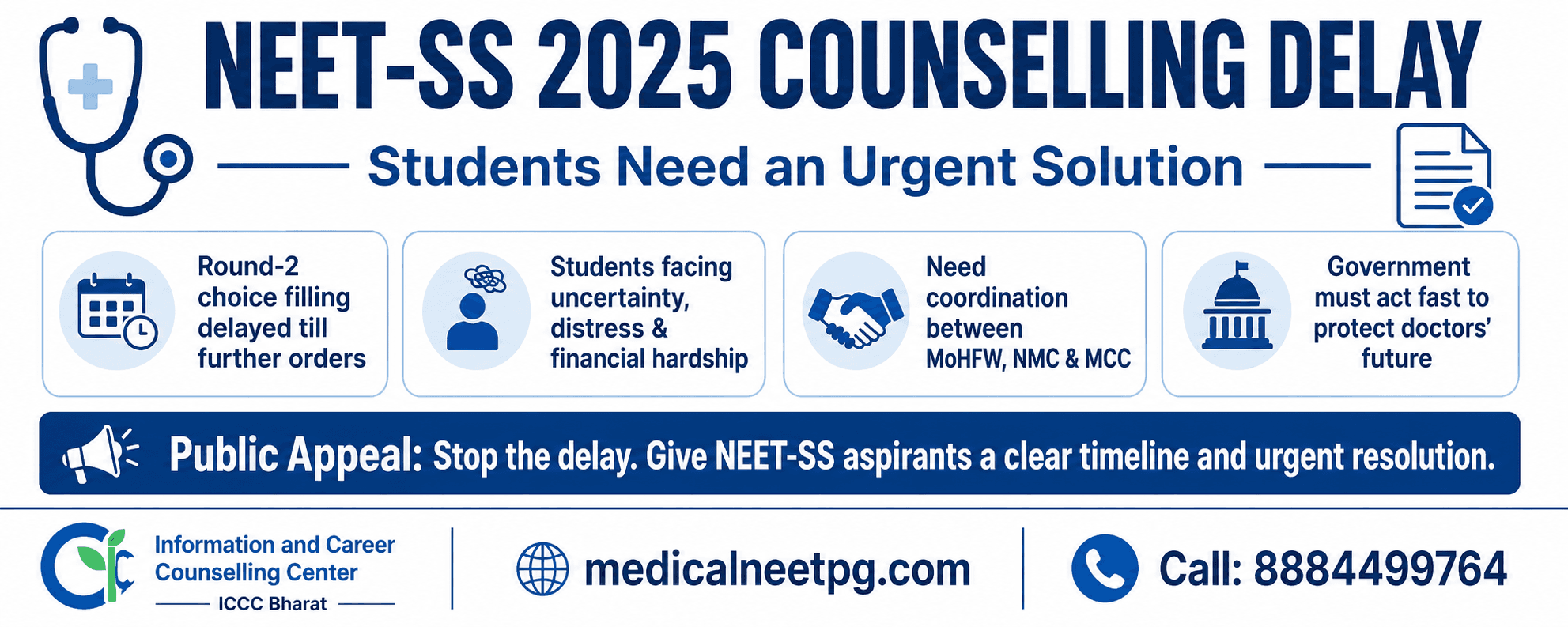
We request the Prime Minister’s Office, Ministry of Health and Family Welfare, NMC, NBEMS and MCC to urgently create a permanent NEET-PG counselling reform mechanism before 2027.
The reform should include:
A fixed national counselling calendar that MCC and all states must follow.
A clear rule on when and how percentile can be reduced.
A minimum marks benchmark to protect the standard of medical education.
A transparent vacancy disclosure system after every round.
A coordinated counselling model so that AIQ, deemed, central and state rounds do not clash.
A special mechanism to prevent government and low-fee PG seats from remaining vacant.
Clear accountability if delays or wrong seat matrices cause student loss.
NEET-PG cannot become an annual drama where students suffer, seats remain vacant and every authority says the responsibility lies somewhere else.
India needs better planning, stronger leadership and competent decision-making in medical education administration. The country cannot afford to waste PG medical seats year after year while hospitals need specialists, medical colleges need faculty and students wait helplessly for answers.
This is not only a student issue. This is a national healthcare issue.